Talking about a (Rosé) revolution……
Posted on
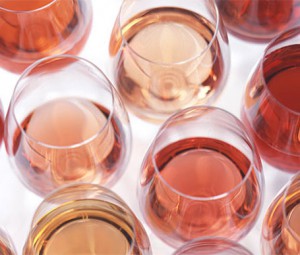 Rosé has always been one of those wine varieties that people love to hate – which is such a shame as a cold, crisp, dry Rosé is a wonderful wine, particularly as the days get hotter.
So why the widespread dislike? In the years following World War II, most Rosés were made to be sweet, ever so slightly fizzy and were cheap to buy. Brands like Mateus and Lancers were incredibly popular and sold in vast quantities. This trend continued until well into the 1980s, when the market started to swing away from sweet wines and people got more serious about drinking dry whites. Winemaking styles for Chardonnays, Sauvignon Blancs and Rieslings started to reflect this quite quickly but Rosés didn’t…..for many it seemed better to leave Rosés well enough alone.
The increasing demand for crisp, dry Rosé has prompted a series of social media based events known as the Rosé Revolution…but more about that in a minute.
A few basic things to know about Rosé (which will impress people at your next dinner party or cellar door experience!)
Rosé can be made in one of three ways
Simply blending a red and white wine together
Sounds a bit bizarre and, believe me, this is seriously frowned upon by most winemakers. Nevertheless, it does happen but definitely does not produce wine worth drinking
As a by-product of making red wine
Part of the process of making a red wine can involve concentrating the wine by removing juice prior to fermentation. This is often referred to as “juice run off” or “bleed off”. This increases the skin-to-juice ratio which will then result in a more concentrated red wine. The juice that is removed can then be made into a Rosé. This method is probably the most common for making a Rosé but is not ideal, because the fruit ripeness needed for a good Shiraz or Cabernet means you end up with a Rosé that is very high in alcohol – not exactly what you look for in a light lunchtime wine.
Purpose made Rosé
This is the ideal way to make Rosé. Red grapes are picked earlier in the season when they’re not too ripe and are made as if they are a white wine. The end result is wine that is best served chilled and has a different set of aromas and textures to your standard white wine.
What to look for in a good Rosé
Texture is key
Wines without texture are lovely aperitifs (think Champagne) but are swamped by food. Wines with texture mean they cut through fats and oils, refreshing the palate and making the food textures more interesting.
Colour is important
Rosé should be anything in colour from very light pink (think salmon or even onion skin) to real ruby or even crimson. Be aware that a really dark Rosé is probably more a light red wine, rather than a true Rosé.
The Rosé Revolution
Now in its fourth year, the Rosé Revolution was established by De Bortoli wines to celebrate the increase of popularity in this dry, Provence-style wine in Australia.
Events are held on 29/30 November and 1 December, from tasting opportunities to food/wine matching dinners featuring Rosé.
The events on these three days kick-off a summer of events celebrating Rosé, so it’s worthwhile keeping an eye on their Facebook page or the website to see what’s happening.
Whilst there are no events planned in Canberra yet, follow #roserev on Twitter to keep up with the simultaneous tastings around Australia – it’s a great way to find out which Rosés are popular and which you are better off avoiding.
Website: http://rosewinerevolution.com
Facebook: www.facebook.com/rosewinerevolution
Twitter: www.twitter.com/rosewinerev
Great local drops
To get started, why not try a few of the lovely Rosé’s Canberra district has to offer? A few recommendations, in no particular order, are:
Capital Wines 2012 ‘The Abstainer’ Rosé (RRP $19). This is a delicious wine that displays lovely red berries, such as raspberry, cranberry and pomegranate. A dry and refreshing style that is perfect by itself or very food friendly.
Lerida Estate 2012 Pinot Noir Rosé (RRP $16.50). The colour of this wine is like a pale Argyle diamond. A cool summer in 2011 produced wines with lovely red fruit aromas, with an intriguing floral overlay. Imagine red cherries and wild raspberries in a basket of roses and violets.
Lark Hill 2008 Sparkling Rosé (RRP $35). Perfect for Christmas or other festive occasions, this Sparkling Rosé was made from Pinot Noir and is fermented in bottle (like a traditional champagne). It is an aperitif style with gorgeous pink colour, creamy mousse and a full palate. The Pinot Noir fruit gives lovely strawberry and brioche aromas as well as a richness on the mid-palate. The sparkling rosé is also certified biodynamic (read: no nasties….more about biodynamics another time.

Leave a Reply
You must be logged in to post a comment.